Articles
Quick ON/OFF Fuel Injector Driver with Nexperia Power MOSFETs
Featured Article | Mike Donnelly | 21 May 2024

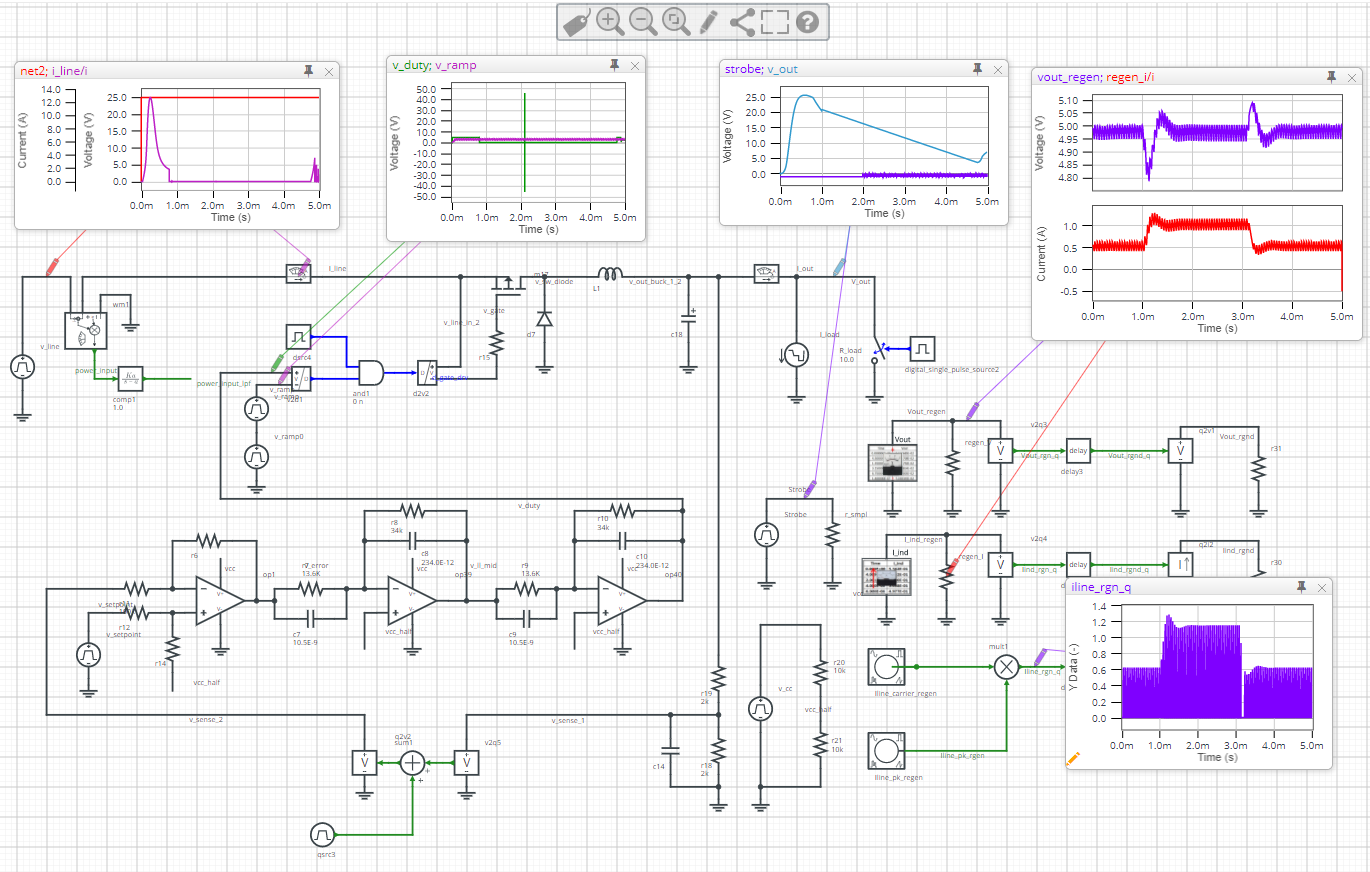
In a companion article published on RS-DesignSpark, I described how a fuel injector driver can leverage the voltage clamping behavior of avalanche-rated power MOSFETs, to improve the speed or “crispness” at injector turn-off. In this article, I’ll show how a simple open-loop voltage doubler circuit can improve the turn-on performance.
Exploring Circuit Behavior Using Parametric Sweep
Featured Article | Matthew Walsh | 25 August 2023Powerful Capability Saves Time (Demo video embedded below)
Circuit simulation is a fundamental aspect of electronic design, enabling engineers to predict the behavior of circuits before physically implementing them. Among the various simulation techniques, parametric sweep stands out as a powerful tool. In this blog post, we will provide an overview of parametric sweep simulations, highlighting their significance, and provide a quick step-by-step demonstration of how to implement in PartQuest Explore to automate the process.
Electro-Thermal Design: Using BCI ROMs for Switch-Mode Power Electronics
Featured Article | Mike Donnelly | 15 March 2021
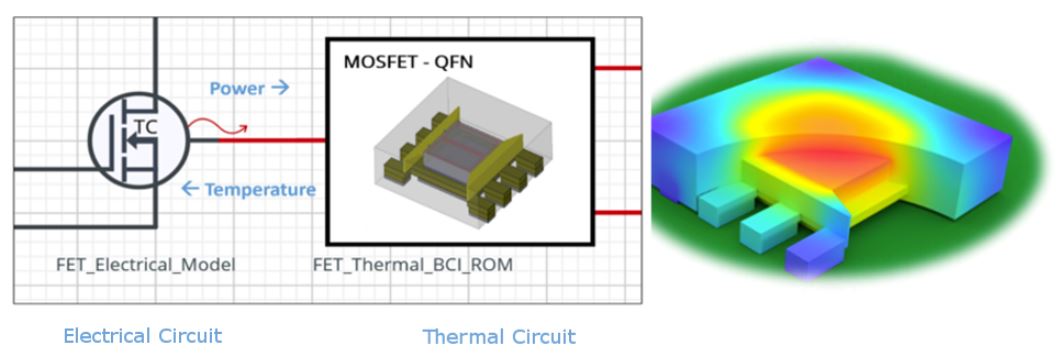
This article describes a method to perform accurate electro-thermal simulations for circuits that operate in switch-mode. This approach addresses the fundamental problem of these divergent requirements:
• The need to simulate long periods of “virtual circuit operation”, due to long thermal settling times
• The need for small simulation time-steps, due to high switching frequencies and fast, non-linear device behavior
Introducing BCI ROM for Electro-Thermal Design
Featured Article | Mike Donnelly | 1 March 2021

The Simcenter Flotherm team recently released a new capability that I believe will revolutionize the electro-thermal design process! It is called BCI ROM (Boundary Condition Independent – Reduced Order Model) technology, a modeling approach to capture accurate thermal characteristics from a 3D analysis, ready for use in 1D circuit simulation.
A Programmable Multiphase Boost Controller for High Efficiency LED Lighting Applications
Featured Article | Mike Donnelly | 7 November 2020
We recently released our first programmable power converter controller model into the PartQuest Explore Partner Library. Working with ON Semiconductor product and application experts, we created a fully-functional model of the NCV78703. It is a single-chip, three-phase high efficiency boost controller that can be used for various automotive LED Front Lighting functions. Thanks to its SPI programmability, a single hardware configuration can support a diverse range of applications just by using different settings.
Electro-Thermal Design Part 2: Analog Electronics
Featured Article | Mike Donnelly | 3 September 2020
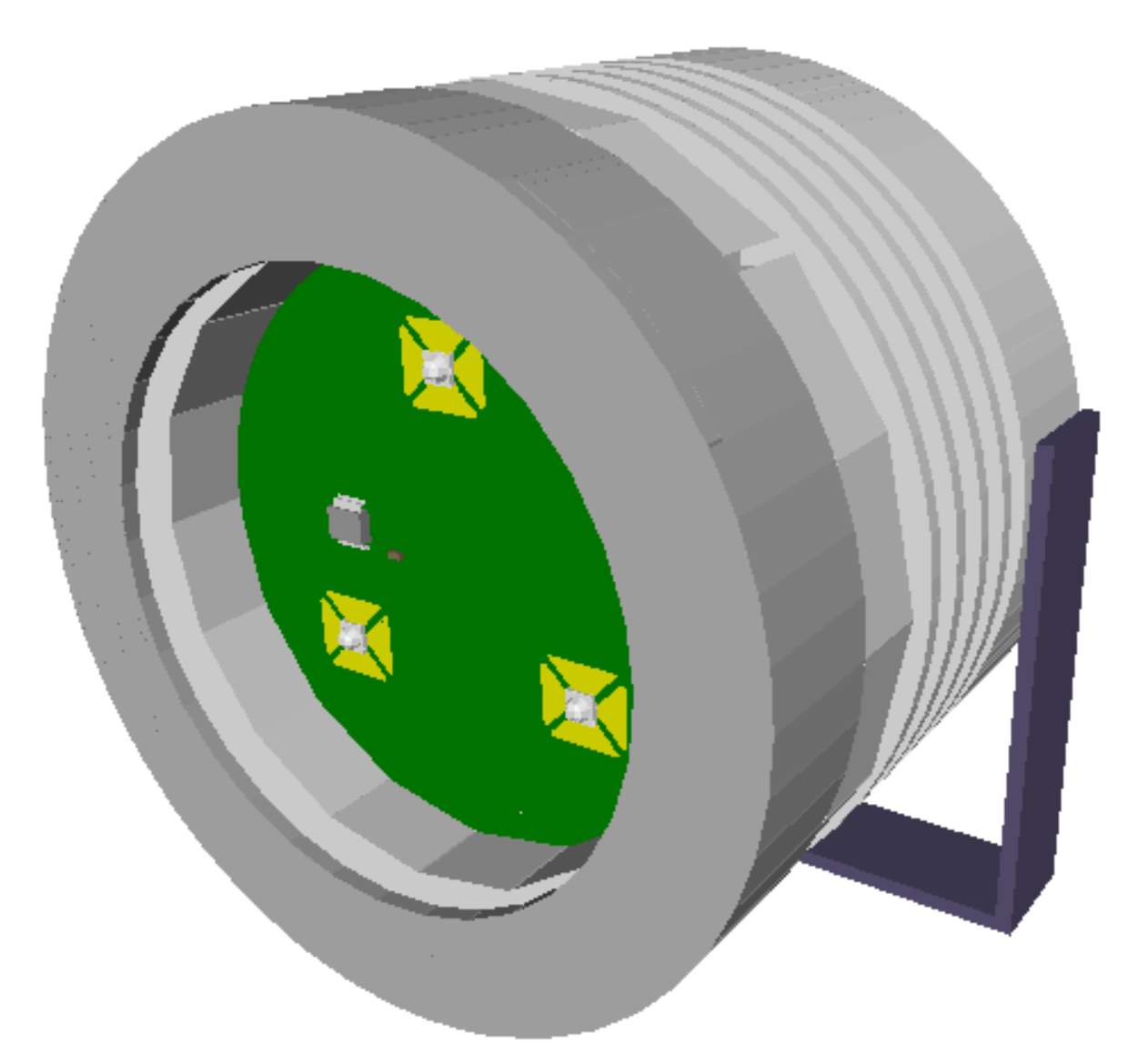
A new thermal model generation capability has recently been provided in Simcenter Flotherm. It will not only improve the accuracy and efficacy of the electro-thermal design process, but will also be easy for electronic circuit designers to use. In this article, which is Part 2 of a series, I’ll focus on an “LED Spotlight” application. This is intended to represent systems that are primarily composed of continuous (non-switching) analog electronics devices.
Electro-Thermal Design Part 1: Digital Electronics
Featured Article | Mike Donnelly | 2 September 2020
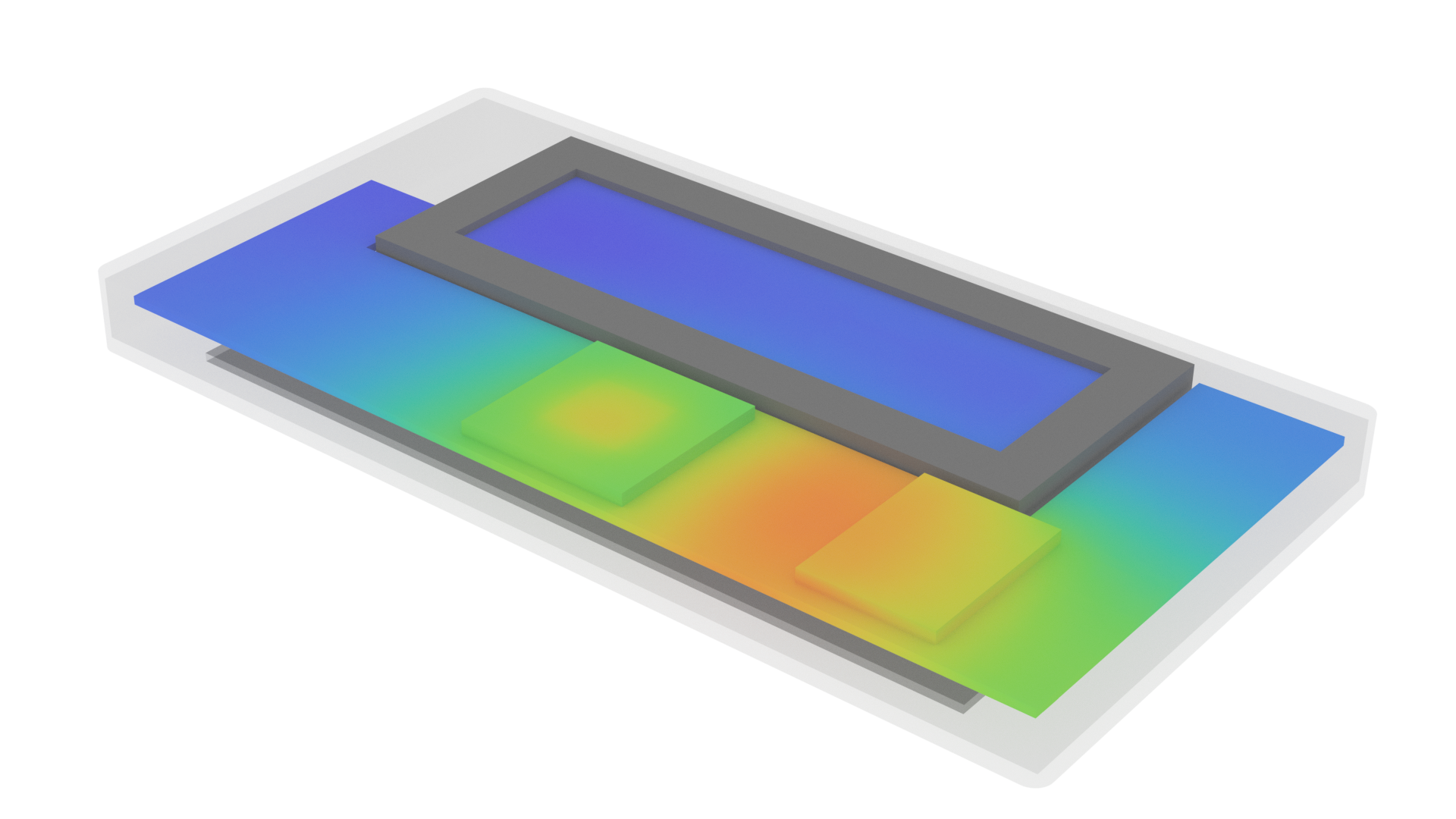
A new thermal model generation capability has recently been provided in Simcenter Flotherm. It will not only improve the accuracy and efficacy of the electro-thermal design process, but will also be easy for electronic circuit designers to use. In this article, which is Part 1 of a series, I’ll focus on an example application: A “smartphone”. This is intended to represent systems that are primarily composed of digital electronics devices.
Efficient Solar Battery Charging System
Featured Article | Mike Donnelly | 12 May 2020
Solar energy systems for residential use are typically limited by code to 600V, but commercial installations can operate at higher voltages. This opens the door to more efficient energy utilization. Achieving that efficiency has been made easier with the introduction of Silicon Carbide (SiC) Power Devices from Rohm Semiconductor. These components offer significant performance advantages over their Silicon (Si) counterparts.

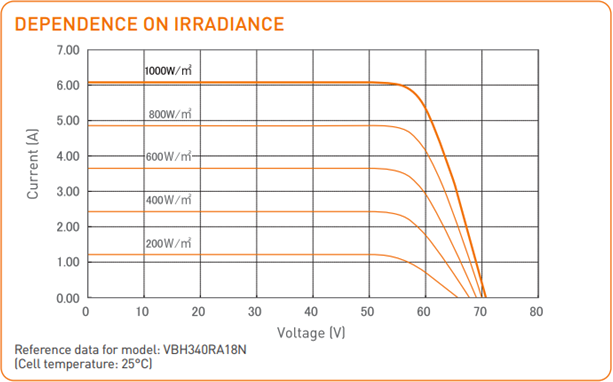
Solar Panel Load Current vs. Voltage at different irradiance levels
LED Driver with Auto-Dimming for Thermal Protection
Featured Article | Mike Donnelly | 21 November 2019
In my previous article I demonstrated an important self-protection feature of the NCV84160 from ON Semiconductor; its ability to enter thermal limit cycling if the internal device temperature gets too high. My friend and fellow model-developer, Alain Stas of Vishay, recently suggested that NTC thermistors could be used to provide similar protection at the circuit board or system level. One application where this could be implemented in a very natural way is for LED lighting systems.

Vishay SMD NTC Thermistors with Enhanced Stability
Test Drive the NCV84160 High-Side Driver Here!
Featured Article | Mike Donnelly | 6 September 2019
ON Semiconductor has recently provided a high-fidelity model of their NCV84160 High-Side Driver. That device has many built-in functions and protection features beneficial to automotive lamp, solenoid and other driver applications.
Creating “Live” Embedded Designs to Demonstrate Your Applications
Featured Article | Mike Donnelly | 13 August 2019We have been asked by several of our customers for instructions on creating “Live” (a.k.a. “tunable”) designs and embedding them in their own web-pages. These component manufactures appreciate the accessibility and customer-education value of these interactive reference designs, for demonstrating key features and effective usage of their devices, in the context to the customer’s application!
This article describes a method for creating this content. It is also product of that approach!
Create a Word Document
Ember Coffee Mug Virtual Teardown
Featured Article | Darrell | 11 July 2019
Virtual Teardown
When I saw the original advertisement for the Ember coffee mug, I was drawn to it like a Seattleite to a Starbucks. I knew that I had to get one and would then inevitably spend my weekend trying to figure out precisely how it works.
Motion Control Design: Frequency Response Modeling of a Flexible Structure
Featured Article | Mike Donnelly | 5 November 2018A versatile and effective modeling capability is available in our HyperLynx product family. It uses complex-pole fitting to extract simulation-ready models from measured frequency response data. This can be useful in a wide range of engineering design applications, from system level transfer function (signal flow) analysis, to modeling component interactions in a circuit simulation. The following example illustrates both of these aspects in a practical application: Design of a motion control loop that includes a flexible structure.
Explore a "Live" Energy Harvesting Design
Featured Article | Mike Donnelly | 9 May 2018In a previous blog post, I provided a number of Energy Harvesting example designs that could be modeled and simulated in PartQuest Explore. These included electrodynamic, thermal and solar energy harvesting for Industrial IoT and Automotive applications. Subsequent to that posting, we added a rich new capability to PartQuest Explore, "Live Designs".
Electric Power Steering - Coordinated Control, Electronics and Motor Design
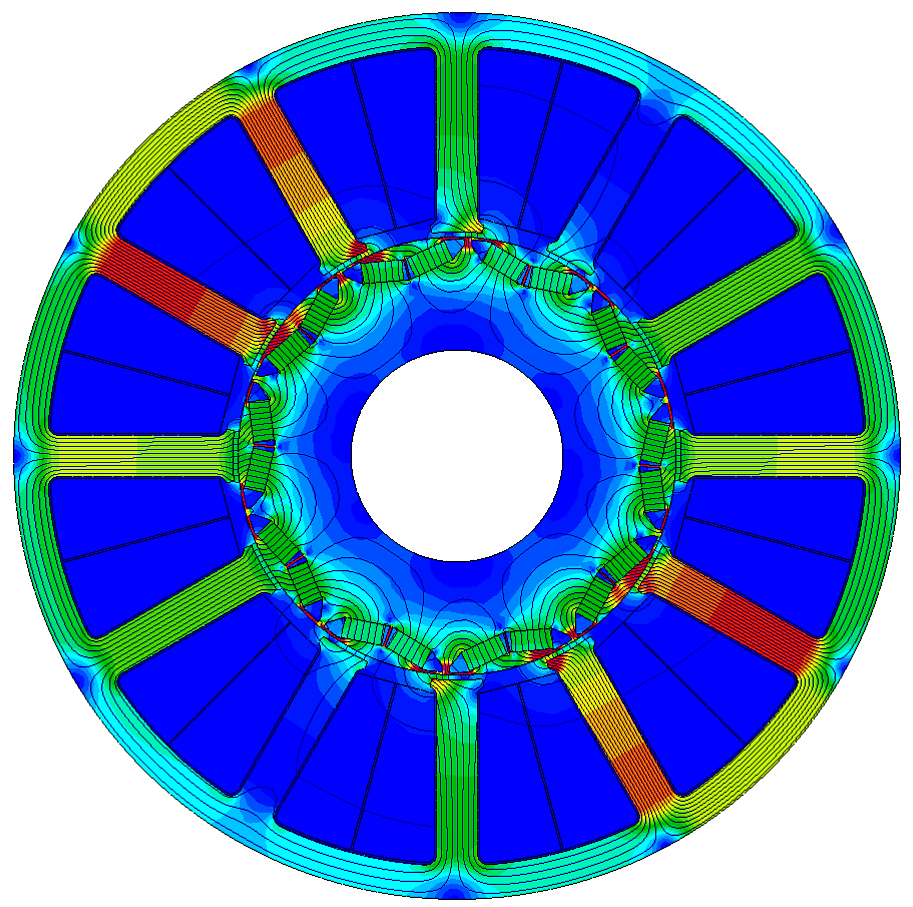
Featured Article | Mike Donnelly | 21 April 2018TElectric Power Steering (EPS) systems provide a challenging control design problem for system integrators. Because the system directly interacts with the driver’s hands, reducing vibration is a must. But controlling the system’s fundamental mechanical resonance requires loop compensation, such as lead, which can make the system sensitive to higher frequency disturbances (1). This can include cogging and torque ripple from the motor, or commutation noise from the drive electronics. For this reason, it is essential to have a tool flow that supports a coordinated design effort across these technologies.

MotorSolve B-field Analysis of the EPS PMSM Motor
Need a Power Fairy? You Need Coordinated Electrical and Thermal Design!
Featured Article | Mike Donnelly | 16 March 2018A colleague of mine, a thermal design engineer, once made a comment that I’ll never forget. I was simulating a power electronics circuit and I placed a scope probe on a transistor model and plotted the power dissipation. Its value was of course changing over time, as the circuit’s operating state was varied during the simulated test scenario. He exclaimed: “You have a Power Fairy!”
Need To Tune-Up Your Network Signal Quality? Now You CAN (FD)!
Featured Article | Mike Donnelly | 1 March 2018Ever since the CAN specification was released many decades ago, designers have pushed their network configurations beyond the conservative limits of the standard, driven by manufacturablity, customization flexibility and other non-technical reasons. With thorough engineering analysis, including electrical simulation of the physical layer, they were able to design communication systems that meet both demanding performance and economic requirements.
Enabling Cloud-based Simulation for Independent and Collaborative Automotive Solutions
Featured Article | Mike Donnelly | 4 December 2017
Power Topologies: An Interactive Handbook
Featured Article | Ben_2 | 23 October 2017This handbook presents an overview of the most important DC-DC converter topologies. The main objective is to guide a designer in selecting the topology with its associated semiconductor devices. Be sure to interact with the embedded designs below, and feel free to take them into your own workspace to explore further!
Multiple Waveform Viewer and Smart Color Scheme
Featured Article | Ben_2 | 5 September 2017PartQuest Explore is all about modeling, simulation, and waveforms – lots of waveforms! We make it easy for you to view your waveforms by clicking on the probe icon, on the application toolbar, and dragging probes onto any wire or component.
Managing PWM Waveforms, Part 1 - Data Reduction
Featured Article | Mike Donnelly | 29 June 2017This is the first part of a three-part series on special handling of PWM waveforms. The first two parts deal with the large amount of data involved. The last part deals with precise characterization in the presence of switching cycle “noise.” I am honored to post this article, which was created by one of our talented community members, a modeling and simulation expert and my friend, Norm Elias.
Energy Harvesting for Industrial IoT and Automotive Applications
Featured Article | Mike Donnelly | 5 June 2017Wireless sensing technology is the data source for many new IIoT and automotive applications. These systems need electrical power to operate the sensor and signal conditioning circuits, as well as for data processing and transmission. A common problem for these systems is the limited lifetime of batteries and the cost of replacing them. One approach that can extend that lifetime, or even eliminate the need for batteries, is Energy Harvesting (EH).
Get the Heat Out! … Electronic-Thermal Design Modeling
Featured Article | Mike Donnelly | 25 March 2017We have recently added a number of new electro-thermal models to our Component Library. These models represent devices that are either temperature sensing/control elements, or electronic components that dissipate significant power and may require thermal analysis. These models include:
TDFS Part 3 – Impedance Measurement for Switching Converters and Power System Stability Analysis
Featured Article | Mike Donnelly | 21 February 2017In this final installment of my series on TDFS (Time Domain Frequency Sweep) analysis, I’ll focus on measuring impedance vs. frequency. I’ll first demonstrate the method by showing the measurement of input impedance for a switching power converter. Then I’ll extend that method to analyze the “impedance stability” of a distributed power system. Power systems may include many DC to DC converters, some acting as sources and other as loads. They may also be distributed over significant distances, so that the impedance characteristic of the interconnecting cables (a.k.a.
Is it a Wire or a Transmission Line?
Featured Article | Mike Donnelly | 6 February 2017Question: When is a wire or cable a transmission line?
Answer: When it is long enough that the propagation delay gives a significant phase shift at frequencies within the bandwidth of the distributed system. In other words, if the delay impacts the dynamics of interaction between the source and load circuits.
Transmission line effects are a key design factor in many electrical engineering applications, including:
Controlling Motors with the Talon SRX
Featured Article | Darrell | 1 February 2017Do you struggle to understand how to use the Talon SRX controller effectively? What is PID and PIDF? How does feedback control work? What is feed-forward control? How are values of P, I, D, & F determined? How is the new Talon SRX "motion profile" feature supposed to be used?
If these are your questions, this blog is for you.
Waveform Measurements Are Here!
Featured Article | Darrell | 24 January 2017Many of you have asked us to provide an easy way to analyze waveforms in PartQuest Explore. Well, the wait is over!
Watch this short video to see what you can do with these new Waveform Analysis Tools.
TDFS Part 2 – Closed Loop Stability Analysis for Switching and Sampled-Data Circuits and Systems
Featured Article | Mike Donnelly | 20 January 2017Stability is an essential quality of most practical circuits and systems. A traditional stability metric for closed-loop control systems is gain and phase margin, based-on the open-loop transfer function (OLTF) or frequency response. A special physical measurement technique for obtaining the OLTF of an operating closed-loop system, pioneered by Dean Venable* in the 1980s, involves injecting a small sinusoidal stimulus in series with the loop, and measuring the absolute signal levels at the injection site.
TDFS Part 1 - Gain and Phase Measurements for Switching and Mixed-Signal Circuits and Systems
Featured Article | Mike Donnelly | 9 January 2017PartQuest Explore provides a family of measurement models that perform “Time Domain Frequency Sweep” (TDFS) analysis. They measure the frequency response of many circuits and systems for which traditional “AC” or frequency-domain simulation is not possible. This includes:
More Motor Models … Switched Reluctance and Stepper
Featured Article | Mike Donnelly | 2 December 2016In my previous blog, “Mechatronics Engineers … Start Your Motors”, I mentioned that we were working on two additional motor types, a Switched Reluctance Machine (SRM) and a Stepper Motor. I’m now happy to report that they have been added to our component library, under the category Magnetic and Electro-mechanical. There you’ll also find our complete set of rotating and linear machine models: